
Salads and Greens All Year Round: Succession Planting in Tunnels
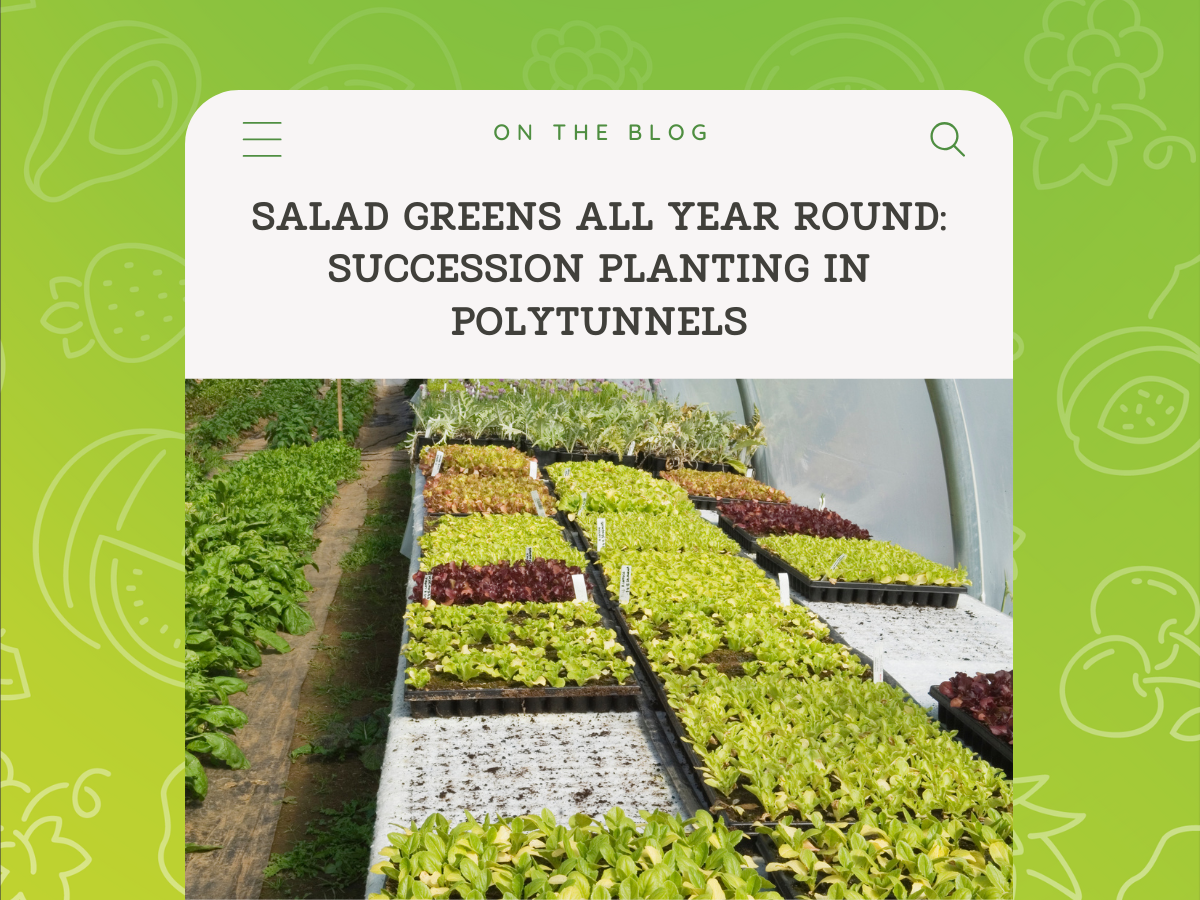
Salad greens are the cornerstone of many gardens and farms, offering quick harvests, consistent demand, and versatility. In Australia’s variable climate, however, producing lettuce, rocket, spinach, and kale year-round can be challenging. This is where a polytunnel becomes invaluable. By creating a controlled microclimate, tunnels allow growers to protect tender leaves from harsh sun, sudden downpours, and pests, while also extending harvests across seasons. When paired with succession planting and vertical growing systems like GROW Towers, tunnels can deliver a continuous supply of fresh greens to families, markets, and restaurants.
Understanding Succession Planting
Succession planting is the practice of staggering plantings to ensure a continuous harvest rather than one glut followed by scarcity. For salad greens, which often mature in as little as 25–45 days, this technique is essential. Otherwise, you’ll end up with more bunches of lettuce than you could possibly eat, or sell.
Key approaches:
Staggered sowing: direct sow seeds every 2–3 weeks, or have an area of your tunnel specifically for raising seedlings that can replace crops you’ve harvested.
Intercropping: sow faster-growing crops (like rocket) alongside slower ones (like kale).
Cut-and-come-again harvesting: extend plant life by harvesting outer leaves instead of entire heads. This is particularly useful if you’re growing food for your family, whereas commercial growers often sell the entire head of lettuce, unless you plan on selling lettuce mixes.
In tunnels, succession planting is easier to manage due to the more consistent conditions, ensuring each planting thrives.
Best Salad Greens for Tunnels in Australia
Different greens perform best in different seasons, but with tunnel protection you can grow:
Lettuce: cos, butterhead, and loose-leaf types are tunnel staples.
Rocket (Arugula): fast-growing and ideal for interplanting.
Spinach & Silverbeet: thrive in cooler conditions but can tolerate mild summer heat with shade.
Asian Greens: bok choy, tatsoi, and mizuna add diversity and grow quickly.
Kale: robust and highly productive, particularly in autumn and winter.
Tip: Rotate between families (lettuce, brassicas, chards/spinachs) to reduce pest and disease pressure.
Maximising Yield with GROW Towers
Traditional soil planting can limit the volume of greens harvested per square metre. This is where hydroponic GROW Towers shine. Each tower can host up to 42 plants in just one square metre, allowing you to dramatically increase yield without increasing tunnel footprint.
Benefits of GROW Towers for salad greens:
Space efficiency: vertical growing maximises limited tunnel space.
Faster growth: hydroponic systems deliver nutrients directly to roots.
Reduced soil-borne disease: ideal for sensitive greens like lettuce.
Perfect for succession planting: swap out individual pockets as crops mature.
For commercial growers, integrating towers with soil beds allows diversification: high-volume crops in towers, with specialty greens and larger-space requiring crops such as tomatoes, cucumbers and capsicum in the soil.
Managing Heat Stress in Summer
Summer in Australia can be brutal on leafy greens, leading to bolting (premature flowering) and bitter leaves. Tunnel growers can counter this with:
Ventilation and shading: reduce light intensity by 30–50%, improve ventilation and reduce temps by 5-8°C .
Roll-up sides & fans: improve ventilation and reduce humidity.
Slow-bolting varieties: heat-tolerant lettuce like Summer Crisp types.
Irrigation management: consistent drip irrigation or hydroponic flow to prevent stress.
Tip: Harvest greens early in the morning during hot months for maximum freshness.
Soil Health for Continuous Cropping
Succession planting puts pressure on soil, so regular care is essential:
Compost top-ups: replace nutrients removed by frequent harvests.
Organic amendments: worm castings, seaweed extract, and compost tea keep soil alive.
Mulching: regulates soil temperature and moisture.
Rotation with legumes: adds nitrogen back into soil beds.
Healthy soil equals nutrient-dense greens, a key selling point for organic growers.
Pest and Disease Considerations
While tunnels reduce exposure, salad greens still face challenges:
Aphids: deterred with ladybirds or neem oil sprays.
Slugs and snails: prevent entry with insect netting and barrier methods.
Downy mildew & leaf spot: avoid by spacing plants for airflow and using drip irrigation.
Fungal issues in towers: flush systems regularly to prevent build-up.
An integrated pest management (IPM) approach ensures chemical-free control.
Harvesting and Post-Harvest Care
Cut-and-come-again: prolongs productivity for up to 6–8 weeks per planting.
Hydroponic harvests: remove individual plants and replant pockets immediately.
Cooling quickly: harvest in the early morning or when temperature cools, wash in cold water and store at 0–4°C for maximum shelf life.
Farm to Fork: freshly harvested greens can reach the market or plate within hours.
Profitability of Salad Greens in Tunnels
Salad greens offer high returns due to their short cycles and strong consumer demand.
Quick turnaround: multiple harvests per season.
High market value: especially for organic, mixed salad blends.
CSA and restaurant demand: chefs value consistent, chemical-free supply.
Local advantage: fresher than supermarket imports, with zero packaging required.
By combining tunnel beds and GROW Towers, small growers can match the output of larger outdoor systems on a fraction of the land.
Polytunnels unlock the potential for year-round salad production in Australia, helping growers sidestep climate extremes, pests, and gluts. With smart succession planting, organic soil care, and innovative systems like GROW Towers, you can ensure a steady stream of crisp, nutrient-rich greens for your table or market. For backyard gardeners, this means fresh salads every week; for commercial growers, it means a reliable, profitable crop that customers keep coming back for.