
Tomatoes in Tunnels: How to Boost Yield and Flavour
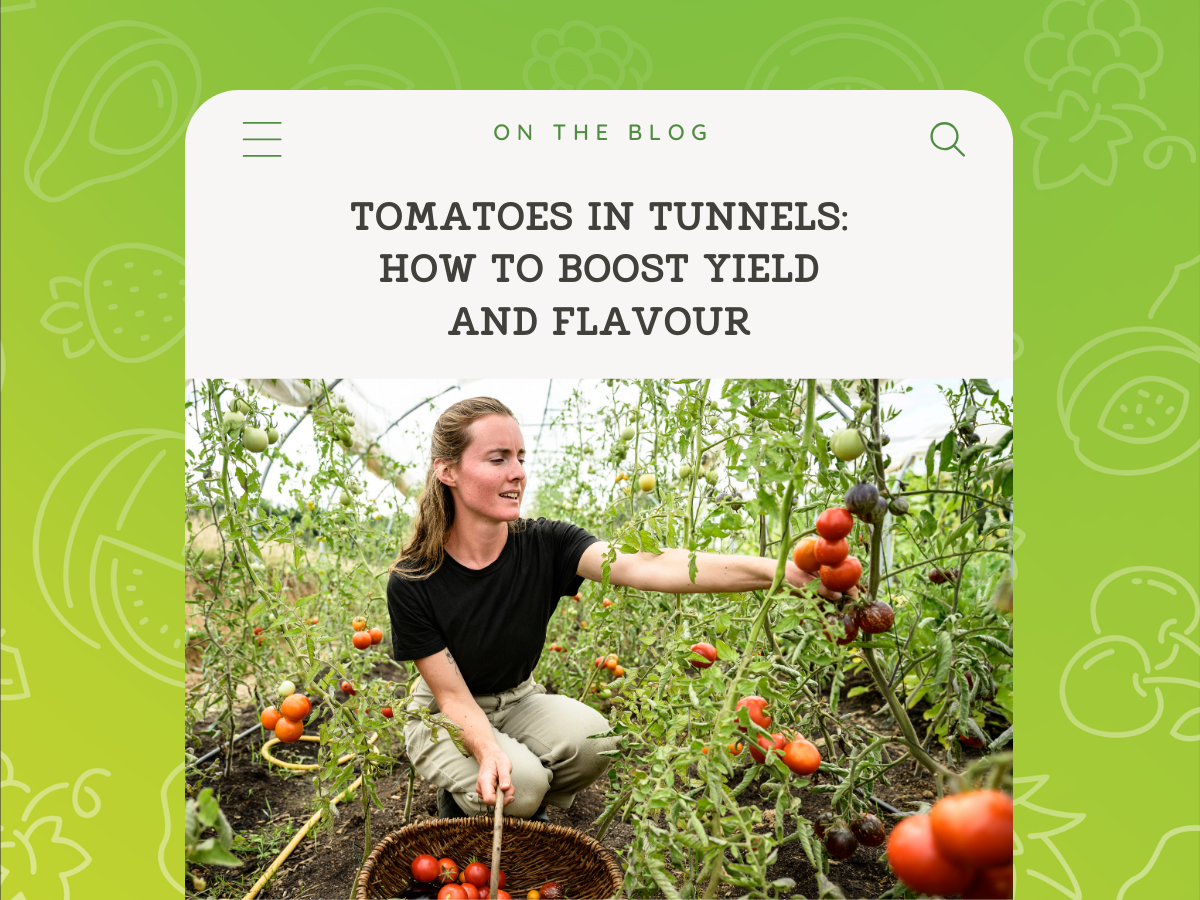
Tomatoes are one of the most rewarding crops to grow under cover. In Australia, where spring heat can arrive quickly and sudden rain or frosts can ruin outdoor crops, a polytunnel provides the perfect microclimate. By managing heat, airflow, moisture, and soil health, you can achieve earlier harvests, better yields, and tastier fruit compared to field-grown tomatoes. In this guide, we’ll dive deep into how to grow organic tunnel tomatoes—from variety choice and pruning to pollination, pest prevention, and harvesting; everything you need to know to have more tomatoes than you know what to do with.
Choosing the Best Tomato Varieties for Australian High Tunnels
Not every tomato performs equally well under cover. In tunnels, you’ll want to select indeterminate (vining) varieties that thrive with trellising and pruning. Popular options include:
Heirlooms: Black Krim, Mortgage Lifter, Green Zebra – prized for flavour, suited for niche organic markets.
Hybrids (disease resistant): Roma VF, Celebrity, or Trust F1 – bred for tunnel growing, with resistance to common fungal diseases.
Cherry tomatoes: Sweet 100, Tommy Toe, and Sun Gold – highly productive and perfect for family gardens or CSA boxes.
Focus on varieties bred for disease resistance, especially to fusarium, verticillium, and nematodes, which are common in warmer Australian soils (more on those later!).
Soil and Nutrient Needs for Tomatoes
Tomatoes are heavy feeders, and tunnel production demands healthy soil management. Start with rich, well-drained soil and incorporate:
Organic matter: compost and aged manure for long-term fertility.
Soil testing: adjust pH to between 6.0–6.8.
Balanced nutrition: use organic fertilisers high in potassium and calcium to encourage flowering and prevent blossom end rot.
Crop rotation: avoid planting tomatoes in the same area of your tunnel year after year. Once the tomato season has run its course, rotate with legumes such as beans or peas, to establish soil quality, followed by cruciferous vegetables (brussel sprouts, broccoli, cabbages, cauliflowers, and kale).
Direct-to-plant nutrients: you may wish to also use liquid nutrients, delivered directly to your crops via an irrigation system, for minimal handling and ensuring each plant receives the right amount of nutrients.
Tip: Plant root crops such as carrots, beetroots and radishes at the base of your tomato plants to maximise your tunnels growing capacity and aerate the soil all at once.
Planting & Spacing Guidelines
Tomatoes need airflow to prevent fungal disease. In tunnels:
You can start your seedlings as early as late July/early August in subtropical tunnel environments.
Space seedlings 45–60 cm apart in rows 90–120 cm apart.
Hang vertical string from or tunnel arches, add extra metal trellis between arches, or construct internal standalone trellising to train the plants and give vertical growing room. With the 3M+ high arch (and 2M high side walls) of our tunnels make great options for vertical-loving plants like tomatoes.
Mulch heavily to retain soil moisture and reduce weed competition.
When watering, water at the base of the plant to avoid mildew. Water regularly – but not overly.
Training and Pruning for Higher Yields
Pruning and training the vine of your tomato plants is critical for managing your crops, and producing the highest yields. Here’s our top tips for pruning and training tomatoes:
Single-stem pruning: remove side shoots (“suckers”) to direct energy into fruit.
Trellising: secure vines vertically, providing growing support and allowing for better airflow around developing fruit and light penetration to the leaves for photosynthesis (how your plant will get its energy).
Leaf pruning: remove lower leaves to reduce splash-borne soil diseases and improve ventilation.
Regular pruning improves both yield and flavour concentration.
Pollination in Tunnels
It’s a question we get a lot about polytunnels – is it possible to grow pollinating crops like tomatoes? It’s true, unlike outdoor crops, tunnel-grown tomatoes don’t always benefit from wind or insect pollination. Without assistance, flowers may not develop into fruit. But many growers see an abundant tomato crop in their tunnels, so never fear, there’s plenty of options to pollinate your plants.
Organic Pollination Strategies:
Manual pollination: gently shake flower trusses or use an electric pollination wand to release pollen.
Air circulation: ensure good ventilation to mimic natural wind movement. Internal fans can help do some extra work for you too if required.
Encourage pollinators: plant bee-friendly flowers near tunnel entrances to attract bumblebees and native Australian pollinators. You’ll need to leave your tunnel doors open for the bees to enter and exit, or build a bee-entryway specifically from your hive into the tunnel.
Pollination management is a simple but often overlooked step that makes a huge difference in fruit set.
Temperature and Humidity Management
Australian springs and summers can quickly overheat tunnels, leading to blossom drop, split fruit, and disease pressure.
Ideal temperature: keep between 21–27°C (daytime) and 16–18°C (nighttime).
Humidity control: prevent condensation (which encourages mould) by venting tunnels in the morning.
Shading: use shade cloth during peak summer heat to protect from sunburn and overheating.
Airflow: roll up tunnel sides, and use fans if necessary, to prevent fungal build-up.
Organic Integrated Pest Management
Instead of chemical sprays, use holistic methods:
Beneficial insects: introduce ladybirds and lacewings to control aphids.
Companion planting: basil, nasturtiums, marigolds and calendula deter pests, attract pollinators and add to tunnel biodiversity.
Crop hygiene: remove plant debris promptly, sterilise tools, and avoid overcrowding.
Biological sprays: neem oil, potassium bicarbonate, or milk spray for fungal prevention.
Rotation is also critical: avoid back-to-back tomato crops in the same soil.
Tunnel-Specific Disease Prevention
High humidity and dense planting make tunnels prone to diseases:
Grey mould (Botrytis): thrive in high humidity—manage with pruning and airflow.
Leaf mould: reduce risk by lowering humidity, spacing plants, and choosing resistant varieties.
Powdery mildew: deter with sulphur or potassium bicarbonate sprays.
Organic prevention beats cure: spacing, hygiene, and resistant varieties are your best defence.
Irrigation and Fertilisation
Tomatoes need steady watering to prevent fruit cracking:
Drip irrigation: delivers water directly to roots and reduces leaf wetness.
Mulching: conserves water and prevents evaporation.
Fertigation: use liquid seaweed, compost tea, or fish emulsion every 2–3 weeks for strong growth.
In hot Australian climates, consistent irrigation is key—erratic watering causes blossom end rot and split fruit.
Yield Benchmarks & Profitability
Tunnel-grown tomatoes in Australia can produce up to 10–15 kg of fruit per plant under organic systems. Compared to open-field production, tunnels offer:
Earlier harvests by 4–6 weeks.
Fewer losses from pests, rain, and cracking.
Potential for premium prices in organic and heirloom markets.
Restaurants, farmers markets, and CSA customers increasingly demand fresh, chemical-free tomatoes—making them a flagship organic tunnel crop.
Harvest & Post-Harvest Handling
Harvest timing: pick at the “breaker” stage (just starting to colour) for transport, or fully vine-ripened for local/direct sale.
Storage: keep at 12–16°C to extend shelf life without sacrificing flavour.
Sorting: grade for size and appearance—heirlooms often have cosmetic blemishes but deliver superior flavour, perfect for niche organic markets.
Profit Opportunities with Organic Tunnel Tomatoes
Heirloom specialty crops: high-value tomatoes (striped, black, or yellow) fetch premium prices.
Value-added products: sauces, sun-dried tomatoes, or CSA boxes.
Market niches: local farmers markets, restaurants, and online veggie box subscriptions.
Tomatoes thrive in the protection and consistency of tunnels. With organic methods—balanced soil, careful pruning, smart pollination, and natural pest control—you can harvest abundant, delicious, and nutrient-rich tomatoes across much of the year. For Australian growers, whether backyard or commercial, tunnel tomatoes represent not only a profitable choice but also one of the most rewarding crops you can grow.