
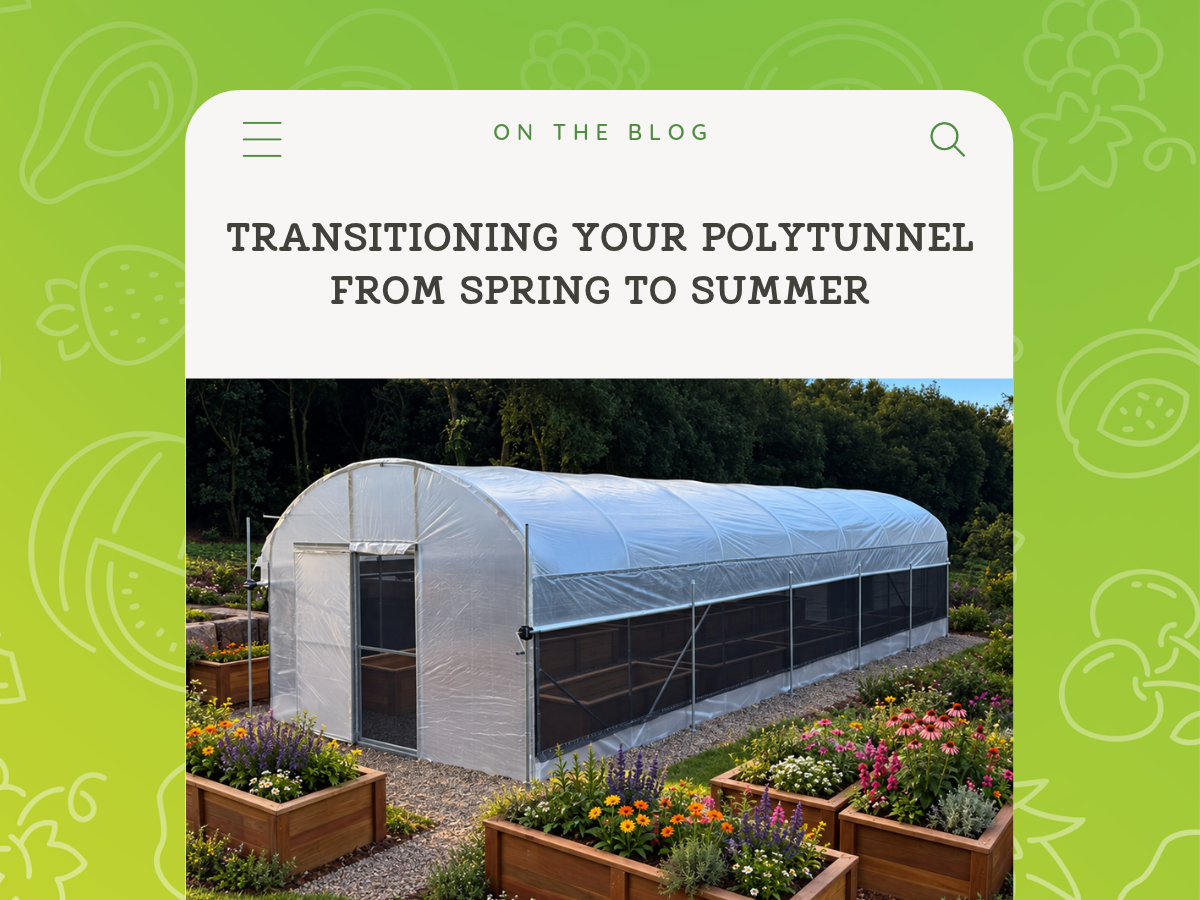
Your Spring to Summer Polytunnel Plan:
Start your summer transition before the first heatwave: check ventilation, irrigation and crop spacing while conditions are manageable.
Keep productive spring crops, but remove finished plants that crowd pathways or restrict airflow.
Match shade to the crop and local conditions; more shade is not automatically better.
Plan for your region: a humid Northern Rivers summer needs different management from a dry inland summer or a cool Tasmanian one.
Spring can make a polytunnel feel wonderfully forgiving. Seedlings establish, growth gathers pace and the beds begin to fill. Then the weather changes, and the setup that helped you capture warmth starts needing a different approach.
A successful summer polytunnel transition is a series of practical adjustments. You are making room for air, checking that water reaches the roots and deciding which plants deserve their place through the warmer months.
You do not need to pull everything out and start again. Start with what is working, then prepare the tunnel for the conditions ahead.
Preparing your polytunnel for summer
Begin when the tunnel regularly feels warmer than your crops need, rather than waiting for a calendar date. Your first warm spell is a useful prompt to inspect the whole growing space.
Start to take notice of the patterns of your polytunnel. Walk through in the morning and return during the afternoon. Notice where the air feels still, which beds dry first and whether the tallest plants are blocking side openings. The sun's position changes throughout the year, so it’s important to take note where the sun hits your tunnel in summer, as this could be vastly different from the winter months.
Understanding the temperature within your tunnel can help you prepare your crops for the summer height. Place a maximum–minimum thermometer in a shaded, ventilated position around crop height. A sensor sitting in direct sunlight can give a misleading picture of air temperature. An outdoor comparison sensor in a similar shaded position helps you see how much extra warmth is accumulating inside.
Keep a simple record of the day's maximum, your opening routine and any crop symptoms. A few observations made consistently are more useful than buying equipment without knowing which problem you need to solve.
Checking your polytunnel’s irrigation system is working and can help ensure you can adequately hydrate your crops. Don’t forget to visually inspect your insect net / shade net walls and doors for any damage, to avoid pests entering the tunnel. It’s also important to ensure your roll-up side winders are functioning properly; whilst you’ll likely keep the side walls up for the majority of summer to allow maximum ventilation, you want to be able to easily wind your walls down if wind picks up in a storm.
What should stay and what should come out?
Keep healthy, productive crops that suit the approaching conditions. Remove plants that have finished, are diseased or take more management than their remaining harvest justifies.
A lettuce patch beginning to flower may be ready to clear, while established tomatoes can remain if they are healthy and manageable. Harvest usable produce first, remove old ties and clear fallen leaves so the next planting starts with accessible beds.
Avoid leaving exhausted plants as temporary shade. Their foliage may also conceal pests and make it harder to inspect the crop behind them. If you need shade, provide it deliberately where the next crop needs it.
For a home grower, the decision might be whether another week of harvest is worth delaying a favourite summer crop. For a market gardener, include labour, expected saleable harvest and the next crop's planting window in that decision.
Plan for the mature canopy
Space new plants for the size they will reach, not the size of the seedling pot. Imagine the tunnel when climbing crops have filled their supports and bush crops spread across the bed.
Keep a clear route to sidewinders, irrigation valves and doors. Those small access decisions matter when you need to make a quick adjustment on a hot afternoon.
How does your polytunnel ventilation routine change in summer?
Shift from conserving warmth to releasing excess heat before it builds. Open available ventilation early enough for the day's conditions, following the operating guidance for your structure.
NSW greenhouse ventilation guidance explains the importance of exchanging inside air with outside air. Moving warm air around the tunnel is a different job from removing it.
Check that roll-up mechanisms move smoothly and openings are not obstructed by pots, weeds or dense foliage. Inspect mesh for dust and damage, and clean it using the supplier's recommended method. Insect screening can restrict airflow, so ventilation needs to be considered with the screens in place.
The Mini GROW Tunnel and Rural GROW Tunnel offer different growing footprints. Whichever you use, assess the actual openings and crop arrangement rather than assuming a routine from another tunnel will transfer unchanged.
If the tunnel remains much hotter than outside despite clear openings, discuss ventilation capacity with the supplier. A circulation fan can help distribute air, but an extraction system needs a suitable supply of replacement air. Neither should be chosen by floor area alone.
How should irrigation change as growth increases?
Adjust irrigation to the crop, root zone and weather. A timer that suited small spring seedlings may not supply enough water once the canopy and fruit load increase.
Run each irrigation zone while you inspect it. Check the first and last outlets, look for blocked emitters and confirm that water reaches the intended bed rather than a pathway. Repair leaks before extending run times across the whole system.
Check moisture beneath the surface, including under mulch. Use a trowel carefully away from major roots to see how far water has penetrated. A damp surface does not prove the active root zone has been watered.
Where mature plants and new seedlings need different treatment, separate their watering if practical. Repeatedly soaking a whole bed to keep a few new seedling plugs alive can leave established plants wetter than intended.
Make water checks easy to repeat
Choose two or three inspection points and return to them. Include the bed that dries fastest and the far end of a watering line, so you are not judging the system only by its easiest section.
Keep a note of the timer setting after each adjustment. If the weather turns cloudy or cooler, review it again rather than leaving the hottest-day programme running indefinitely.
Do you need to add summer shade?
Add shade when the crop and observations justify reducing incoming light. First check ventilation and water delivery so shade is solving the right problem.
Tender young plants and some leafy crops may need a different level of protection from established fruiting crops. Look at growth as well as afternoon appearance: a plant can be protected from harsh sun yet receive too little light for productive growth.
Our GROW Tunnels utilise an optional add-on retractable internal shade net system, that allows you to easily adjust shade requirements, without needing to remove an entire layer off the roof cover. It’s also perfect for when you have hot spots within the tunnel, as you can easily cover half the tunnel where necessary.
If reducing direct sun is your main requirement, explore the Mini Shadehouse. The full shade cloth option allows rain through, while the Solarweave-roof option allows you control over irrigation requirements. Your need to manage rainfall should be part of the decision. If you’re looking to harvest rainwater from the roof you can also add gutters to the Solarweave-roof option.
Planning a new growing space? Start your GROW Tunnels quote with summer ventilation and cover choices in mind. Get an instant quote for any Mini, Shadehouse or Rural GROW Tunnel; or submit an enquiry for a Commercial GROW Tunnel and our team can help.

A practical two-week transition plan
This is an illustrative plan for a backyard grower moving from spring greens to a mixed summer garden. Adjust the pace to your weather and the crops already established.
During the first few days, record conditions and test every watering zone. Make a list of crops to retain, harvest or remove, and check that the summer planting choices suit your region.
Next, clear one finished section at a time. Inspect the soil and existing fertility before adding more inputs. Replant only the space you can water and monitor reliably, keeping the rest accessible while you finish the changeover.
During the second week, review the opening routine and inspect new seedlings each morning. If extra shade is needed, trial it over the relevant area and compare growth and crop condition with your earlier notes.
Finish by writing a short care sheet for anyone helping: which openings to adjust, where to check moisture and who to contact if an irrigation line fails. A clear routine makes holiday care much easier.
What changes in different Australian climates?
Your local combination of heat, humidity, rain and overnight temperature determines the priority. The beginning of summer is a planning cue, not a national planting instruction.
In humid coastal districts, allow generous access around vigorous crops and pay attention to drainage outside the tunnel. A rain-shedding roof cannot prevent water entering from poorly drained surrounding ground.
In hot, dry districts, review water availability and the beds exposed to strong afternoon sun. In cooler southern or elevated areas, retain flexibility for chilly nights; permanently shading the whole tunnel too early may work against spring growth.
In the tropical north, the build-up and wet season may call for a different crop mix altogether. Use local growing guidance rather than applying a temperate summer list to tropical conditions.
Mistakes to avoid in transitioning your polytunnel from spring to summer
Doing every job during the first heatwave creates avoidable pressure. Test irrigation and opening mechanisms while repairs are straightforward, and keep spare compatible irrigation fittings where you can find them.
Overfilling every newly cleared gap is another common trap. Leave enough room to reach the soil, harvest comfortably and inspect plants. For more on maintaining that balance, see our guide to fans and internal shading.
Finally, avoid changing water, shade and feeding together without keeping notes. Unless plants need urgent help, make deliberate adjustments so you can identify which changes improved conditions.
Even in hot summers there are always cooler and cloudier days. It’s better to wait for these days when planting out tender new seedlings than trying to battle hot temperatures and adding stress and lower survival odds to the seedling.

Frequently asked questions about polytunnel growing in summer
-
No. You’ve worked hard to keep your crops healthy and thriving through spring. For most climates, many of your spring crops will continue through to summer. Keep healthy crops that remain productive and suit the warmer conditions. Clear finished plants gradually so you can prepare and replant manageable sections without interrupting the entire garden.
-
Treat your irrigation settings from spring as a starting point that needs review as temperature and conditions change.
Keep checking soil moisture regularly. Increased air temp will mean increased plant requirements and also evaporation from the soil. -
Not necessarily. Whilst roll-up sides and our signature dual-layer door system, allows ventilation width-ways and length-ways of your tunnel, the amount of ventilation required in your tunnel depends on many factors, including:
your climate; max temps and natural winds
the positioning of your tunnel; whether there are windbreaks affecting airflow
your crops: crop height, individual crop preferences and crop density.
Monitor the actual tunnel conditions, keeping an eye on humidity, air temperature and soil temperature. Our internal shade net kits can help reduce internal temperatures, while extraction fans help with airflow and climate control.
Check out our more detailed guide to ventilation and keeping crops cool here.