
Real Winter Yields: What to Expect
How much can you grow in a polytunnel during winter?
You can grow a steady supply of fresh produce in a polytunnel during winter, though yields are typically lower than summer. The key benefit is consistency, not peak output.
Typical winter yields:
Regular harvests of leafy greens
Ongoing herb production
Slow but reliable root crops
Longer-term brassica harvests
What to expect:
Slower growth rates
Fewer crop losses
More predictable harvest timing
What matters most:
Planting early (autumn)
Choosing the right crops
Maintaining tunnel conditions
A polytunnel helps turn winter into a productive growing season, rather than a gap.
One of the most common questions growers ask is, “How much can I actually grow in winter?”
It is a fair question, especially for backyard growers trying to decide whether a tunnel is genuinely worth it.
The honest answer is this: winter yields are real, useful and often surprisingly steady inside a polytunnel, but they are different from summer yields. Growth is slower. Turnover can be longer. Some crops will cruise along, while others will sit and wait for more warmth.
What a polytunnel gives you is not a summer garden in the middle of winter.
What it gives you is something more practical: reliable production when outdoor growing becomes inconsistent. And for many growers, that reliability is exactly what matters most.
Why winter yields feel disappointing outdoors
When people judge winter output, they are often comparing it to their best spring or summer harvests.
Just like you change up your clothing choices for the middle of summer, you need to change your growing methods to suit the climate.
The real comparison should be between winter growing in the open and winter growing in a protected tunnel.
Outdoors, winter crops often face:
cold winds that slow growth and damage foliage
heavy rain that compacts beds and creates disease pressure
inconsistent establishment due to weather swings
more total crop loss over the season
That is why outdoor winter gardens can feel patchy, even when you choose the right crops.
Inside a tunnel, those setbacks are reduced. That does not mean every crop grows fast, but it does mean more of your planting effort is likely to turn into an actual harvest.
The key winter yield mindset shift: consistency over peak output
This is the biggest mental shift for growers planning a winter tunnel.
Winter production is less about chasing a huge one-off harvest and more about maintaining a dependable supply of fresh food over time.
For a backyard grower, that usually means:
picking greens each week instead of buying them
keeping herbs available through the colder months
pulling root vegetables as needed rather than all at once
extending autumn-planted crops further than an outdoor bed would allow
In other words, the value of a winter tunnel is often measured in continuity.
You are not starting from scratch every time the weather turns. You are maintaining momentum.
What kind of winter yields are realistic?
Rather than attaching a single number to winter output, it is more useful to think in crop groups.
Leafy greens
These are usually the most productive and rewarding winter crops in a tunnel.
Lettuce, spinach, mizuna and Asian greens can provide steady picking across the season, especially when planted in succession. Growth is slower than in warm weather, but harvests are often regular and dependable.
For many households, this category alone can noticeably reduce weekly grocery spending.
Herbs
Herbs may not produce large bulk yields, but they are one of the most consistent and practical winter tunnel crops.
Parsley, coriander, dill and chives give repeated small harvests that add real day-to-day value in the kitchen.
Root crops
Carrots, radishes, beetroot and spring onions are often slower through winter, but they perform well in tunnel beds because soil conditions stay more even and less compacted than outdoors.
These crops are especially useful because they can be harvested progressively.
Brassicas
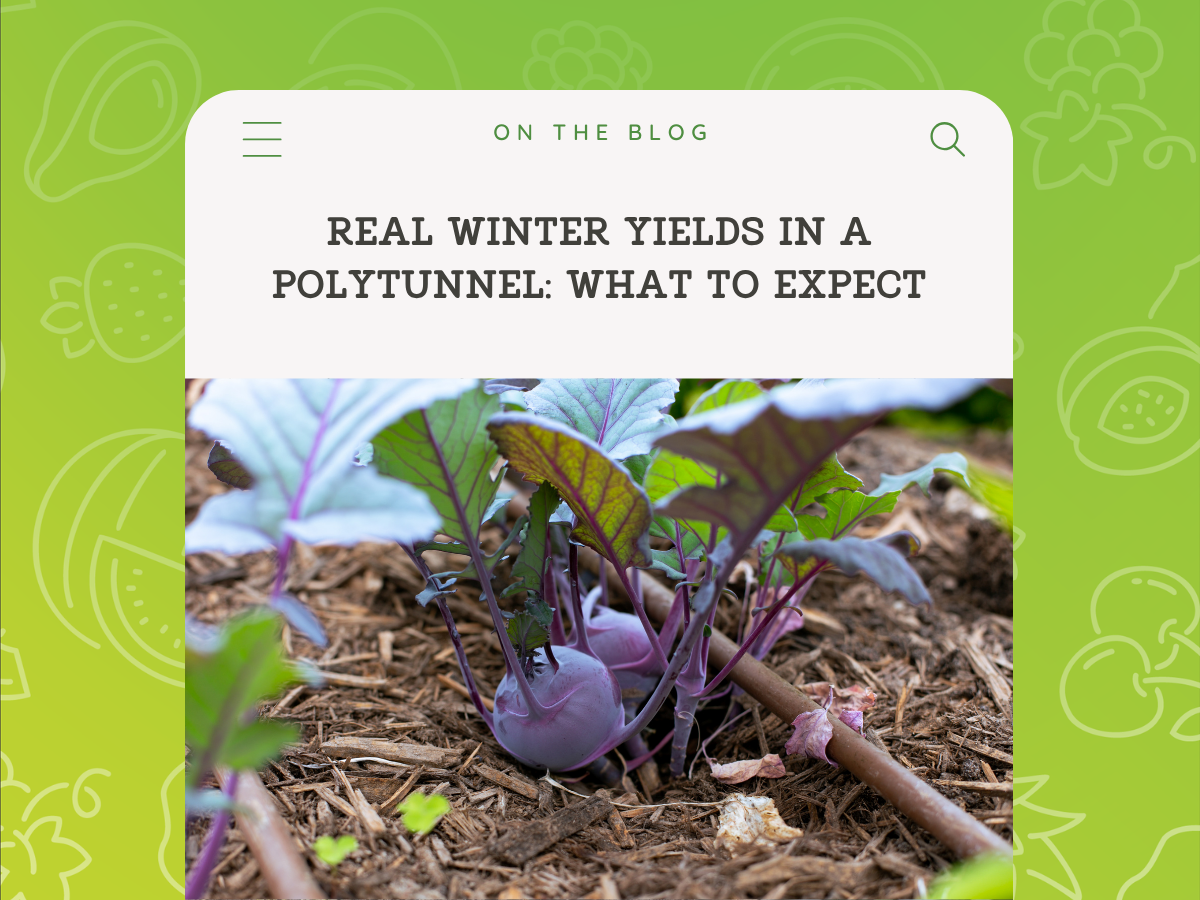
Kale, rocket, kohlrabi and bok choy are all strong winter candidates, though they generally require more patience and space. Their value in a tunnel comes from stronger establishment, reduced weather damage and more reliable quality.
What affects winter yield the most?
Winter output is not determined by the tunnel alone.
The structure gives you the environment, but the result still depends on how you use it.
1. Planting time
This is probably the single most important factor.
The most productive winter tunnels are usually established before winter arrives. Crops planted in late summer and autumn have time to develop strong roots and good early growth before day length shortens.
If you plant too late, the tunnel still helps, but the crop may take far longer to become productive.
2. Crop selection
Not everything belongs in a winter tunnel.
Growers get the best results when they focus on cool-season crops that already suit the conditions. Trying to push warm-season crops too far into winter often leads to disappointing yields and wasted space.
3. Light access
Winter light is limited, so the light you do have matters more.
A tunnel placed in full sun, with a clean cover and sensible shade management, will always perform better than one that is shaded, dirty or poorly positioned.
4. Ventilation management
Many growers think winter means closing the tunnel as much as possible.
But stale, humid air slows crops down in a different way. Good ventilation on milder days reduces disease pressure and helps maintain healthier plants, which supports better long-term output.
5. Soil health
Healthy beds lead to healthier plants.
A tunnel protects crops from weather, but it cannot compensate for poor soil structure, low fertility or neglected irrigation management. Compost, organic matter and a sensible watering routine still matter every bit as much in winter.
What does a useful winter tunnel look like for a backyard grower?
For most growers, a successful winter tunnel is not one that produces everything.
It is one that keeps a reliable core range of fresh food available.
That might mean:
a section of mixed lettuces for steady picking
a bed of spinach or Asian greens for cooking and salads
parsley, coriander and chives for kitchen use
carrots or beetroot filling the gaps
a row of kale or rocket for longer-term harvests
That combination creates a garden that feels active all winter, even though it is working at a different pace than summer.
And that is where the real value appears. The tunnel becomes a practical supply system, not just a seasonal project.
Why winter yield matters more than yield numbers alone
A kilogram harvested in winter often has greater value than a kilogram harvested in summer.
Why? Because winter produce is often:
more expensive to buy
less fresh by the time it reaches stores
less available in consistent quality
harder to replace quickly when prices spike
That is why the question is not only “How much can I grow?”
It is also “What does it save me from needing to buy?” and “How much more control does it give me over my food supply?”
For many growers, the answer is enough to make a tunnel very worthwhile.
How to improve your winter yields
If you want better output from your tunnel this season, these are the biggest areas to focus on.
Plant before winter, not in response to it
Strong autumn establishment usually leads to better winter harvests.
Use succession planting
Rather than sowing one big batch, stagger plantings so harvests remain steady.
Prioritise high-use crops
Grow what your household buys often. This improves the practical value of every square metre.
Keep the tunnel productive at different heights and stages
Mix quick greens, slower roots and longer-term brassicas so the space keeps working.
Keep reading the season
Winter management is about small adjustments. Open for airflow on mild days, close in time to trap warmth, and stay on top of maintenance before problems build up.
If you want a broader guide to the season, our blogs on Growing Food Through Winter in a Polytunnel and Frost Protection Without Heating are useful companion reads.
Which tunnel size makes sense for winter food production?
For many households, a Mini GROW Tunnel is enough to create a very useful winter growing system. It gives backyard growers a manageable protected space for salads, herbs, roots and seasonal staples.
A Rural GROW Tunnel opens up more room for crop rotation, larger family production or commercial growers.
A Commercial GROW Tunnel is the right fit for growers working at farm scale.
Final thoughts
Real winter yields are not about chasing summer-style abundance.
They are about producing useful, reliable food through the hardest part of the year.
Inside a polytunnel, winter crops are better protected, harvest windows are longer and setbacks are fewer. That means even when growth slows, the garden keeps working.
For backyard growers, that is often the real win.
Not perfection. Not huge numbers. Just steady harvests, fewer interruptions and more confidence that your growing space can keep supporting you through the cooler months.
If you are planning a winter growing system of your own, get an instant quote on our polytunnel range and find the right setup for your space and goals.
FAQs
How much can you grow in a polytunnel during winter?
It depends on climate, crop choice and planting time, but many growers can maintain steady harvests of greens, herbs, roots and brassicas through winter.
Are winter yields in a tunnel lower than summer?
Yes, usually. Growth is slower in winter, but yields are often far more reliable than outdoor winter growing.
What is the most productive winter crop in a polytunnel?
Leafy greens such as spinach, lettuce and Asian greens are often the most productive and useful winter crops for backyard growers.
Is a polytunnel worth it for winter food production?
For many households, yes. It improves reliability, reduces crop losses and helps maintain a more consistent supply of home-grown produce.
What matters more for winter yields: tunnel size or crop planning?
Crop planning usually matters more. Even a smaller tunnel can be highly productive in winter if it is planted early and used well.